

Course Content
-
0 / 4
Preparing the Practitioner
-
Welcome to Acupoint Alchemy!
-
Setting Your Intention
-
Meridian Stretch Practice and Palpation

-
Breathwork & Qi Cultivation

-
-
0 / 3
Module 1 - Foundations of Assessment & Treatment
-
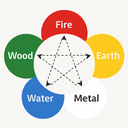
Understanding Qi, Yin & Yang, and the principles that guide treatment
-
Excess vs. deficiency, Heat vs Cold
-
Treatment Intentions
-
-
0 / 12
Module 2 - The Meridian System
-
Meridian Pathways - The Lung Meridian

-
Meridian Pathways - The Large Intestine Meridian
-
Meridian Pathways - The Stomach Meridian

-
Meridian Pathways - The Spleen Meridian
-
Meridian Pathways - The Heart Meridian

-
Meridian Pathways - The Small Intestine Meridian

-
Meridian Pathways - The Bladder Meridian

-
Meridian Pathways - The Kidney Meridian
-
Meridian Pathways - The Pericardium Meridian

-
Meridian Pathways - The Triple Warmer Meridian

-
Meridian Pathways - The Gallbladder Meridian

-
Meridian Pathways - The Liver Meridian

-
-
0 / 1
Module 4 Acupoints & Point Categories

Acupoint Categories - The Front Mu Points
Front-Mu Points
The Front-Mu Points are twelve points located on the chest and abdomen, each associated with one of the twelve Zangfu organs.
The word Mu (募) is commonly translated as collecting or gathering. Traditionally, these are areas where the Qi of the corresponding Zangfu organ gathers on the anterior surface of the body.
Unlike the Back-Shu points, which are all found along the Bladder Meridian, the Front-Mu points are distributed across several meridians. Some are located directly over or relatively close to their associated organ, while others are not.
Like the Back-Shu points, Front-Mu points can be useful both for assessment and treatment.
Tenderness, tension, fullness, resistance, weakness or other changes in these areas may provide another piece of information about the pattern presenting—but a reactive Front-Mu point should never be interpreted on its own as evidence of disease in the corresponding organ.
The Twelve Front-Mu Points — Superior to Inferior
| Point | Front-Mu of | Location |
|---|---|---|
| LU1 — Zhongfu | Lung | On the upper lateral chest, in the 1st intercostal space, 6 cun lateral to the anterior midline |
| REN17 — Shanzhong | Pericardium | On the anterior midline, level with the 4th intercostal space |
| LIV14 — Qimen | Liver | In the 6th intercostal space, 4 cun lateral to the anterior midline |
| GB24 — Riyue | Gall Bladder | In the 7th intercostal space, 4 cun lateral to the anterior midline |
| LIV13 — Zhangmen | Spleen | On the lateral abdomen, inferior to the free end of the 11th rib |
| REN14 — Juque | Heart | On the anterior midline, 6 cun superior to the umbilicus |
| REN12 — Zhongwan | Stomach | On the anterior midline, 4 cun superior to the umbilicus |
| GB25 — Jingmen | Kidney | On the lateral abdomen, inferior to the free end of the 12th rib |
| REN5 — Shimen | Sanjiao / Triple Warmer | On the anterior midline, 2 cun inferior to the umbilicus |
| ST25 — Tianshu | Large Intestine | 2 cun lateral to the centre of the umbilicus |
| REN4 — Guanyuan | Small Intestine | On the anterior midline, 3 cun inferior to the umbilicus |
| REN3 — Zhongji | Bladder | On the anterior midline, 4 cun inferior to the umbilicus |
Because several of these are very close vertically, I wouldn't rely on the table order alone for finding them. REN5, REN4 and REN3, for example, are best learned relative to the umbilicus.
Front-Mu Points as Assessment Tools
Just as we can palpate the Back-Shu regions, we can learn a great deal from careful palpation of the chest and abdomen.
A Front-Mu area may feel:
- tender or sensitive
- tight or resistant
- full or distended
- warmer or cooler than surrounding tissues
- weak, soft or depleted
- restricted during respiration
These findings become another clue.
For example, tenderness around ST25 does not mean that there is something medically wrong with the Large Intestine. Instead, we ask whether what we are feeling fits with the rest of the person's presentation.
Do they also report constipation, diarrhea, abdominal discomfort or changes in bowel function?
Does the abdominal tissue feel full and resistant, or soft and depleted?
Is there Heat? Cold? Stagnation? Deficiency?
Palpation becomes meaningful when we correlate it with the rest of the assessment.
Treating the Front-Mu Points
Front-Mu points can also be treated directly when they fit our treatment intention.
They are particularly interesting because several lie in regions bodyworkers are already accustomed to assessing and treating: the rib cage, diaphragm, epigastrium and abdomen.
But treatment doesn't necessarily mean isolating a point and pressing it.
We may work through the surrounding tissues, use sustained acupressure, incorporate abdominal massage, work with breathing, or choose another point elsewhere in the body that supports the same treatment intention.
And, just as we saw with the Back-Shu points:
The way we treat the point depends on what we find.
A full, tense, resistant abdomen may call for a different approach than an abdomen that feels weak, cold or depleted.
Important Front-Mu Points
Several of these points are going to become very familiar because they appear elsewhere in the course.
LU1 — Zhongfu
Front-Mu Point of the Lung
Located on the upper lateral chest in the first intercostal space.
LU1 is particularly relevant when the clinical picture involves the Lung, chest or respiration. Traditionally it is used for patterns involving cough, wheezing, chest fullness and disrupted Lung Qi.
For a bodyworker, the region also gives us information about upper-chest breathing, pectoral tension and movement through the upper rib cage.
Because this point lies on the chest, treatment should be respectful and appropriate to the client's anatomy, comfort and boundaries.
REN17 — Shanzhong
Front-Mu Point of the Pericardium
Influential Point of Qi
We've already met this point.
REN17 lies on the anterior midline at the level of the fourth intercostal space and is strongly associated with the chest and movement of Qi.
Traditionally it may be considered when there is chest oppression, difficulty taking a full breath or disruption of Qi within the chest.
Its second appearance is important:
Front-Mu of the Pericardium + Influential Point of Qi = this is one to remember.
LIV14 — Qimen
Front-Mu Point of the Liver
Located in the sixth intercostal space, 4 cun lateral to the midline.
LIV14 is particularly relevant when Liver Qi Stagnation forms part of the pattern and may traditionally be considered with rib-side discomfort, chest or abdominal distension and digestive symptoms associated with Liver disharmony.
For bodyworkers, the lower rib cage itself is worth observing and palpating. Breathing mechanics, diaphragmatic movement and tension through the intercostal and abdominal tissues can all influence what we feel here.
GB24 — Riyue
Front-Mu Point of the Gall Bladder
Located in the seventh intercostal space, 4 cun lateral to the midline.
GB24 may be considered when Gall Bladder patterns are present, particularly with discomfort or fullness through the hypochondriac region and digestive presentations.
Again, this is a sensitive region overlying the lower rib cage and abdominal organs. Strong or aggressive pressure is not appropriate simply because we have located the point.
LIV13 — Zhangmen
Front-Mu Point of the Spleen
Influential Point of the Zang Organs
Another point we've already met.
LIV13 is located inferior to the free end of the 11th rib.
Its relationship with the Spleen makes it particularly relevant to patterns involving digestion, transformation and transportation, abdominal distension and Spleen Deficiency.
Because it is also the Influential Point of the Zang, LIV13 gives us another example of one point carrying several layers of information.
REN14 — Juque
Front-Mu Point of the Heart
Location: On the anterior midline, 6 cun superior to the umbilicus.
REN14 is the Front-Mu Point of the Heart and is traditionally used in patterns involving the Heart, chest and Shen.
Its anatomical location also makes it particularly interesting—and important for bodyworkers to approach with awareness.
Deep within the upper abdomen lies the abdominal aorta, the major artery carrying blood from the heart into the abdomen and lower body. Because of its size and position, an aortic pulsation can often be felt through the upper abdomen, particularly in people with less abdominal tissue.
When palpating between REN12 and REN14, it is therefore not unusual to feel a strong rhythmic pulsation beneath the hands. A palpable aortic pulse by itself is not an abnormal finding.
This gives us an interesting anatomical connection with REN14's traditional relationship to the Heart. The point isn't anatomically located over the Heart itself, but it lies on the anterior midline in a region where we may readily feel the pulsation of the body's largest artery.
As always, an interesting anatomical correspondence does not establish the mechanism of the acupoint—but it gives us another reason to understand what lies beneath our hands.
A Note About Safety
The presence of the abdominal aorta means that deep or aggressive pressure in this region should be approached cautiously, particularly when the practitioner feels an unusually prominent pulsation or knows the client has a history of aortic aneurysm, aortic surgery, dissection or other significant vascular disease.
REN12 — Zhongwan
Front-Mu Point of the Stomach
Influential Point of the Fu Organs
We've just explored this point in much greater depth.
REN12 is strongly associated with the Middle Jiao, Stomach and digestive function, and may be considered with patterns involving epigastric discomfort, nausea, fullness, poor appetite and disrupted Stomach Qi.
Its position in the upper abdomen also gives us the fascinating anatomical relationship we discussed with the deeper abdominal lymphatic pathways and the transport of chyle from the digestive system.
So this point now appears as:
Front-Mu of Stomach + Influential Point of Fu + Middle Jiao/Earth + interesting digestive/lymphatic anatomical relationship.
Definitely one to remember.
GB25 — Jingmen
Front-Mu Point of the Kidney
Located inferior to the free end of the 12th rib on the lateral abdomen.
GB25 gives us an anterior/lateral counterpart to thinking about the Kidney through the lower back.
Traditionally it may be considered with Kidney patterns involving the lumbar region and urinary function.
For a bodyworker, the location is particularly interesting because we're also close to the 12th rib, quadratus lumborum and thoracolumbar region—an area where we frequently find significant mechanical tension.
Again, traditional energetic relationships and Western anatomy give us different information about the same area, rather than one proving the other.
ST25 — Tianshu
Front-Mu Point of the Large Intestine
Located 2 cun lateral to the centre of the umbilicus.
This is an extremely useful abdominal point.
ST25 is traditionally important for regulating the intestines and may be considered with constipation, diarrhea, abdominal pain, distension and irregular bowel function.
For anyone incorporating abdominal massage or acupressure, this is one of the Front-Mu points I would particularly want them to recognize.
REN5 — Shimen
Front-Mu Point of the Sanjiao
Located on the anterior midline, 2 cun below the umbilicus.
REN5 is associated with the Sanjiao and therefore brings us back to concepts students encountered in the Meridian module: fluid transformation and movement through the Three Jiaos.
Its traditional indications include abdominal and urinary presentations and disorders involving fluid metabolism.
REN4 — Guanyuan
Front-Mu Point of the Small Intestine
Located on the anterior midline, 3 cun below the umbilicus.
REN4 is much more important than its Front-Mu classification alone would suggest.
Traditionally it is a major point for nourishing and strengthening Qi, Blood, Yin, Yang and Kidney function, particularly in deficient presentations. It also has strong associations with the lower abdomen and reproductive system.
This is therefore another point students are going to encounter repeatedly.
And because of those traditional nourishing applications, moxibustion at REN4 will eventually give us another useful connection when we discuss treatment techniques.
REN3 — Zhongji
Front-Mu Point of the Bladder
Located on the anterior midline, 4 cun below the umbilicus.
REN3 is particularly associated with the Bladder, urinary system and Lower Jiao and is traditionally considered with urinary difficulty, frequency and other lower abdominal and genitourinary patterns.
Its low abdominal location also means that treatment requires particular attention to client consent, draping, pregnancy and appropriate scope of practice.
Front-Mu and Back-Shu: Two Sides of the Assessment
Each Zangfu organ effectively gives students two regions they can investigate:
Front-Mu → anterior body
Back-Shu → posterior body
We don't have to decide that one is “better.”
If someone presents with digestive symptoms, for example, we might palpate REN12, the Front-Mu of the Stomach, and also BL21, the Back-Shu of the Stomach.
If the Large Intestine is part of our working pattern, we might compare ST25 anteriorly with BL25 posteriorly.
Kidney gives us GB25 anterior/lateral and BL23 posteriorly.
That gives the practitioner another opportunity to ask:
Does what I'm feeling on the front correspond with what I'm finding on the back—and does either correspond with what the client has told me?
We are still not diagnosing an organ based upon a tender point.
We're building a pattern from multiple pieces of information.
A Note About Safety
The anterior body requires a different quality of touch than the back. Beneath these points are the ribs, lungs and abdominal and pelvic organs, and several points lie in sensitive or intimate areas.
Pressure should always reflect the anatomy beneath the hands, the client's presentation and their comfort. Avoid aggressive deep pressure over vulnerable structures, use appropriate draping and consent, and modify or avoid abdominal treatment when pregnancy, acute abdominal symptoms, recent surgery or other contraindications make direct work inappropriate.