

Dry Needling vs Acupuncture: What’s the Difference in Training?
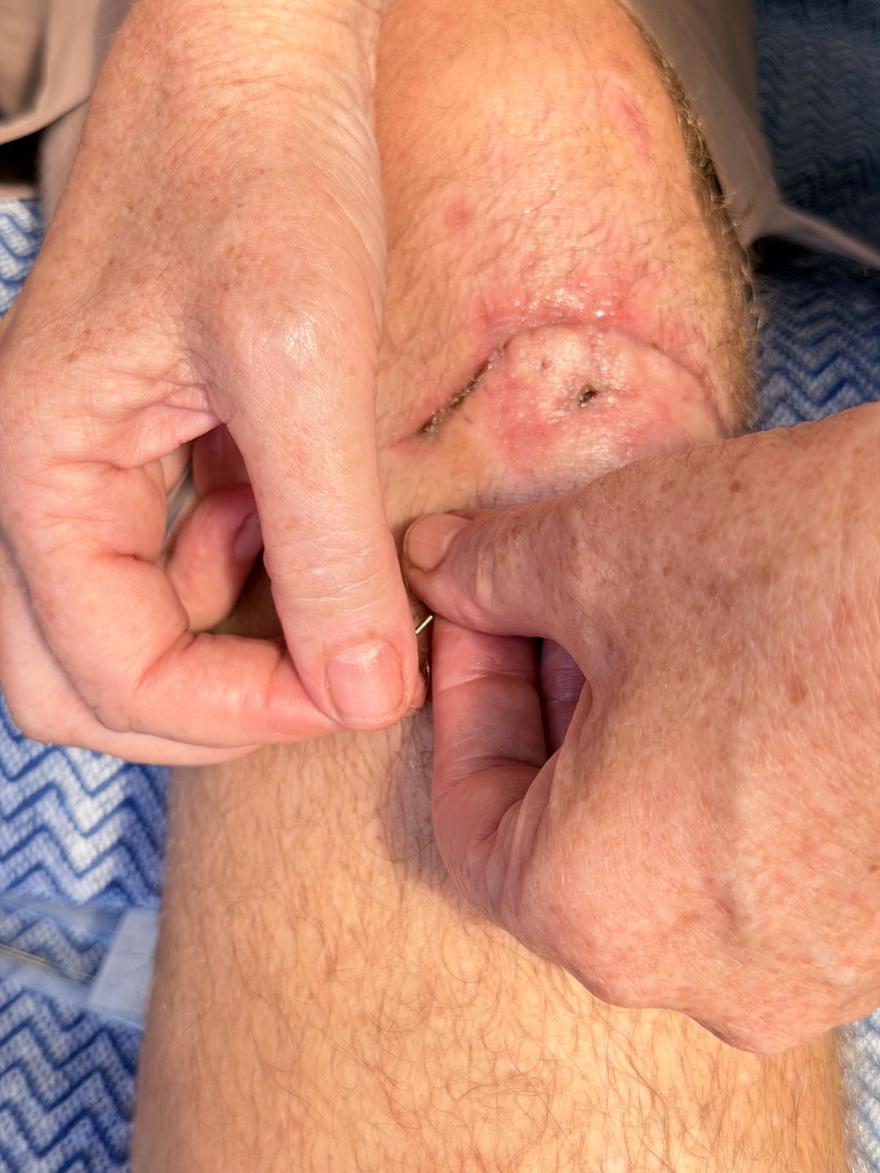
Many people are surprised to learn that Registered Acupuncturists study several hundred hours of anatomy and physiology as part of their training.
In fact, if you’ve ever been told that acupuncturists don’t study anatomy and physiology, you’re not alone. This misconception comes up fairly regularly in conversations with clients.
Recently, something came up in a professional discussion that reminded me just how common this misunderstanding is. Occasionally, clients tell me they’ve been advised to see a practitioner who performs medical acupuncture or dry needling because they believe acupuncturists don’t have sufficient biomedical training.
That statement always surprises me a little.
The Reality of Acupuncture Education
Many people assume that acupuncture training is mostly energetic or philosophical. While the traditional medical framework is certainly an important part of the medicine, acupuncture education also includes substantial biomedical training.
Most acupuncture diploma programs in Ontario include:
-
several hundred hours of anatomy and physiology
-
extensive study of meridian theory and the classical acupuncture system
-
hundreds of hours of point-location training
-
supervised clinical practice treating patients
Acupuncture education therefore combines modern biomedical knowledge with a complete traditional medical system.
Different Training Pathways for Using Acupuncture Needles
Because this question comes up so often, I spent some time digging deeper into the educational pathways for practitioners who use acupuncture needles in Ontario.
What I found confirmed something important: while there can be overlap in biomedical sciences, the training pathways and clinical frameworks can be quite different depending on the practitioner’s background.
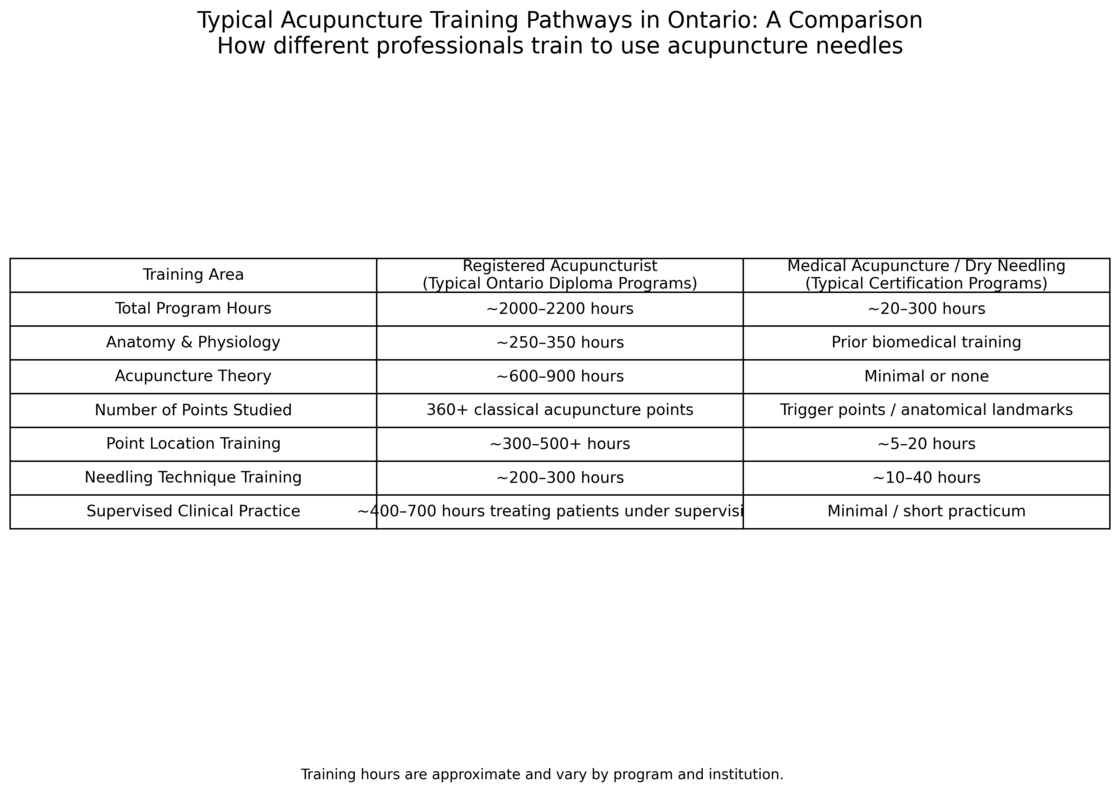
Healthcare professionals who practice medical acupuncture or dry needling often come to the work with strong biomedical training in their own disciplines. However, the acupuncture-specific training in these programs is typically shorter and often focuses primarily on musculoskeletal applications, such as trigger point therapy.
Registered Acupuncturists, on the other hand, complete several years of study focused specifically on the acupuncture system, including meridians, point location, diagnosis, and treatment strategies.
A Comparison of Training Pathways
To help clarify these differences, I created a comparison chart illustrating the typical training pathways for acupuncture-related therapies in Ontario.
Acupuncture Is More Than a Technique
One of the most important things to understand is that acupuncture is not simply a technique — it is an entire clinical system.
Traditional acupuncture involves:
-
a detailed map of 360+ classical acupuncture points
-
meridian pathways connecting physiological systems
-
diagnostic frameworks that guide treatment strategy
-
point combinations used to regulate and restore balance in the body
Different practitioners may use acupuncture needles in different ways depending on their training and clinical perspective.
Neither approach is inherently “better.” They simply come from different educational models and therapeutic frameworks.
Helping Patients Make Informed Choices
Understanding these differences helps patients make more informed decisions about their care.
Some people seek treatment specifically for musculoskeletal pain, while others are looking for a broader approach that addresses systemic issues such as digestion, sleep, stress, hormonal balance, or chronic conditions.
Knowing how practitioners are trained can help patients choose the approach that best matches their needs.

0 comments
Leave a comment