

What Are Acupoints? Understanding the Hidden Communication System of the Body

What Are Acupoints? Understanding the Hidden Communication System of the Body
Many practitioners have heard of acupoints, but few truly understand what they are or why they work.
Acupoints are often associated exclusively with acupuncture, leading many massage therapists and bodyworkers to assume they are only relevant when needles are involved. In reality, acupoints can be stimulated using pressure, movement, cupping, gua sha, heat, and other hands-on techniques, making them valuable tools for virtually every manual therapist.
More Than Just Points
An acupoint is not simply a dot on the skin.
Think of an acupoint as a communication center within the body—a place where information can be accessed and influenced. These points exist along pathways known as meridians, which connect muscles, fascia, joints, organs, and body systems into an integrated network.
For more than 2,000 years, East Asian Medicine practitioners have observed that stimulating specific points can influence pain, movement, circulation, digestion, stress levels, sleep, and overall function.
Modern research has found that many acupoints correspond with areas of increased nerve density, fascial intersections, vascular structures, and connective tissue planes. While science continues to explore the mechanisms involved, skilled practitioners have been using these points successfully for centuries.
Acupoints Are Not Magic
One of the biggest misconceptions about acupoints is that they are mysterious or magical.
In reality, they are highly practical.
Every acupoint has specific actions and functions. Some points help reduce tension and excess activity, while others support areas that are weak, depleted, or under-functioning. Some influence local tissues, while others create changes in distant parts of the body.
The key is understanding not only where a point is located, but why you are using it.
This is where many practitioners struggle.
Why Some Treatments Work Better Than Others
Two practitioners can use the same point and achieve completely different results.
The difference often comes down to assessment and intention.
Before selecting an acupoint, it is important to understand the underlying pattern. Is the condition excessive or deficient? Is the problem local or systemic? Which meridian is involved? What tissues are affected?
When practitioners understand these relationships, point selection becomes more precise and treatment outcomes often improve dramatically.
Acupoints Work Together
Acupoints are rarely used in isolation.
Just as muscles function within chains and movement patterns, acupoints work within networks. A point on the hand may influence the neck. A point on the foot may affect digestion. A point near the ankle may help regulate headaches.
Understanding these relationships allows practitioners to move beyond symptom-based treatment and begin addressing the deeper patterns contributing to a client's condition.
Why Bodyworkers Should Learn Acupoints
You do not need to be an acupuncturist to benefit from acupoint knowledge.
Massage therapists, shiatsu practitioners, osteopaths, physiotherapists, and bodyworkers of all types can incorporate acupoints into their existing work.
Acupoint knowledge can help practitioners:
-
Assess clients more effectively
-
Identify patterns that might otherwise be missed
-
Reduce strain on their hands and body
-
Achieve better results with less effort
-
Expand their treatment options
-
Increase confidence when working with complex cases
Many practitioners discover that once they understand acupoints and meridians, they begin seeing the body differently. Instead of treating isolated symptoms, they learn to recognize patterns and connections that influence the entire system.
The Real Power of Acupoints
The true value of acupoints lies not in memorizing hundreds of locations.
It lies in understanding how the body's communication system works.
When you learn how acupoints interact with meridians, fascia, muscles, joints, and internal systems, you gain a framework that can guide assessment, treatment planning, and clinical decision-making.
This is why acupoint knowledge has remained relevant for over two millennia—and why it continues to help practitioners achieve remarkable results today.
The question is no longer whether acupoints work.
The question is whether you're using them to their full potential.
Ready for some free training? Click to join the waitlist for my next free training: Acupoint Alchemy: The Hidden Intelligence of Acupoints and Meridians
Ready to learn how to apply acupoints in clinical practice? Explore the Acupoint Alchemy training and discover how acupoints and meridians can improve your assessment skills and treatment outcomes.
Continue Your Study of Acupoints and Meridians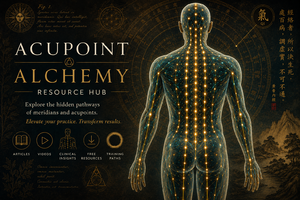
Explore the Acupoint Alchemy Resource Hub →
Lisa Dowling | Meridian Care Center
Founder, Acupoint Alchemy

0 comments
Leave a comment