

Build the Fences, Play in the Field
Build the Fences, Play in the Field
What Are the Foundations of Effective Acupressure Treatment?
Right now, I am writing and delivering a new course called Acupoint Alchemy. In the course, we explore the meridians and acupoints, along with the assessment tools, and clinical reasoning tools used in acupressure to help practitioners choose the most effective meridians and point combinations for each client.
Because there is much more to acupressure than learning a collection of individual points.
One of the main reasons practitioners fall short in the impact of their treatments is that they have not been given a strong enough foundation. They may know that a particular point is commonly used for headaches, anxiety or back pain, but they do not necessarily understand why they would choose that point—or whether it is appropriate for the person lying on their table.
For almost 20 years, my students have heard me repeat one particular phrase:
Build the fences, then play in the field.
Why Good Fences Matter
This expression comes from my background growing up on a farm and working with animals. I learned early that good fences are essential.
A fence establishes the boundaries. It protects what is inside, identifies the weak points and creates a space in which there can be freedom.
Traditional Chinese Medicine is rooted in the understanding that human beings are not separate from nature. The patterns we observe in the natural world are reflected within the body: heat and cold, excess and deficiency, movement and stillness, growth and decline.
A related Hermetic phrase is:
“As above, so below; as below, so above.”
People often extend this idea to say, “As within, so without.” Although this is not a traditional Chinese quotation, it expresses something very similar to the relationship between the macrocosm of nature and the microcosm of the human body. What happens within us is often reflected in the world around us—and sometimes nature delivers the lesson with an almost comical sense of timing.
The Weak Spot in My Fence 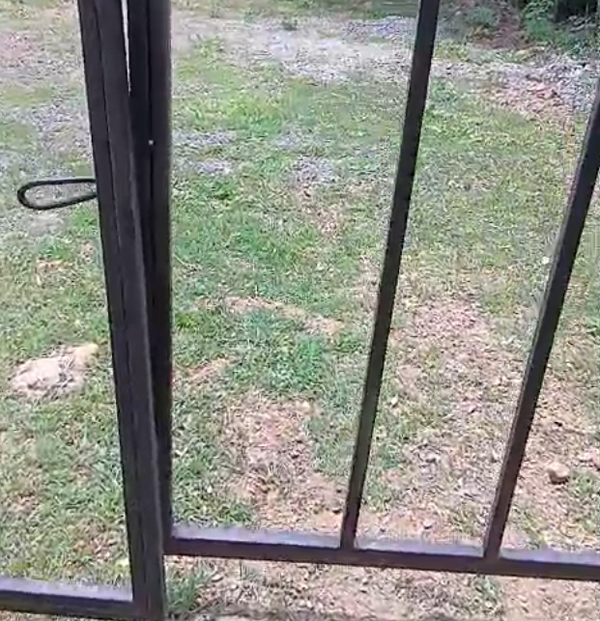
I recently purchased a small property with fruit trees and a pasture that will eventually be home to a couple of horses.
In the meantime, the local livestock had discovered that my property was an excellent place to dine. Before I could protect the fruit trees and everything else growing inside, I needed to build a fence around the property.
I knew the front gate was not the best. I could squeeze between the bars myself, but I wasn’t particularly concerned about an animal getting through. The rest of the fence seemed secure, so I let it go.
Then, while writing the lesson in Acupoint Alchemy about building the fences, my gardener sent me a video.
The gate was bent out of shape, one of the hinges was broken—and a small horse had found his way into my pasture.
I already knew there was a weak spot in the boundary. I simply hadn’t dealt with it.
Fortunately, no major damage was done. We allowed the horse to fill his belly with fresh grass before taking him out and repairing the weak point in the fence.
The timing was not lost on me. 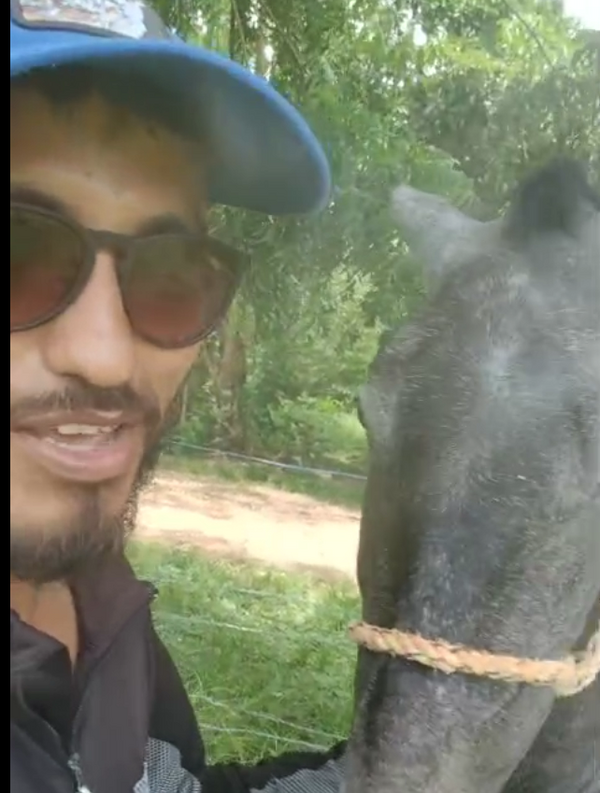
What Are the Fences in Clinical Practice?
In treatment, our fences are the parameters that allow us to practise safely and effectively.
They include:
- Our scope of practice
- The indications and contraindications for a treatment
- Our understanding of anatomy and pathology
- An accurate assessment of the client
- The ability to recognize heat, cold, excess and deficiency
- Our knowledge of the meridians and acupoints
- Our clinical reasoning and discernment
- Our awareness of the limits of our own training
These things are not meant to restrict us. They create the conditions in which we can work creatively.
When we understand the potential challenges, risks and limitations, we can try different approaches within a safe and clearly defined space. We can explore different point combinations, listen to what we feel beneath our hands and adjust the treatment according to the response of the person in front of us.
That is what it means to play in the field.
It does not mean following a rigid protocol or becoming so afraid of making a mistake that we lose our intuition. It means developing a strong enough foundation that our intuition has something reliable to work with.
Freedom in treatment comes from understanding the boundaries.
Our Emotional Fences Matter Too
At almost the same time as the horse found the weak spot in my physical fence, I was experiencing a similar lesson emotionally.
Like most people, I have certain situations in which my boundaries are more vulnerable. Not surprisingly, one of mine is family. When someone in my family is injured or has a problem, my instinct is to drop everything and run to help—often without first considering the effect it may have on me or my business.
That is also a weak fence.
Our weak spots have a way of being tested repeatedly until we recognize them and decide what needs to be repaired.
The same thing happens in clinical practice.
Perhaps you can be persuaded by a client to provide a treatment that falls outside your comfort zone. Perhaps a client insists that you work more deeply, treat an area you are uncertain about or use a technique that your clinical reasoning tells you is not appropriate.
Listening to your client is important. But listening does not mean automatically agreeing to everything they request.
You must also listen to your inner voice.
You must use your knowledge, assessment skills and clinical discernment to decide whether what the client is asking for is safe, appropriate and indicated for their particular situation. Sometimes the best clinical decision is to modify the treatment, choose another approach, refer the client to someone else or simply say no.
A clear boundary protects both the practitioner and the client from harm—and from the consequences of working against our better judgment.
First, Do No Harm
This is precisely why I begin my treatment sessions with a short meditation and clearing ritual. It allows me to become present, put aside distractions and reconnect with the principle commonly expressed as:
“Do no harm.”
Although those exact words do not appear in the original Hippocratic Oath, they capture one of its central ethical intentions.
For me, this is not simply about avoiding an unsafe technique. It means quieting my own agenda, paying attention to the person in front of me and making treatment decisions based on what is appropriate for them—not on what I want to prove or what they are pressuring me to do.
Clinical freedom is not the absence of boundaries.
It is what becomes possible when strong boundaries, sound knowledge and clear intention are already in place.
Build the fences.
Repair the weak spots when you find them.
Then, within the safety of that foundation, give yourself permission to play in the field.
How to learn more about this subject:
Check out this link to watch my YouTube video about How to make Acupoints More Effective
Watch this free webinar, explaining my approach in my new course, Acupoint Alchemy
All the best,
Lisa Dowling | creator, Acupoint Alchemy
Meridian Care Center
0 comments
Leave a comment